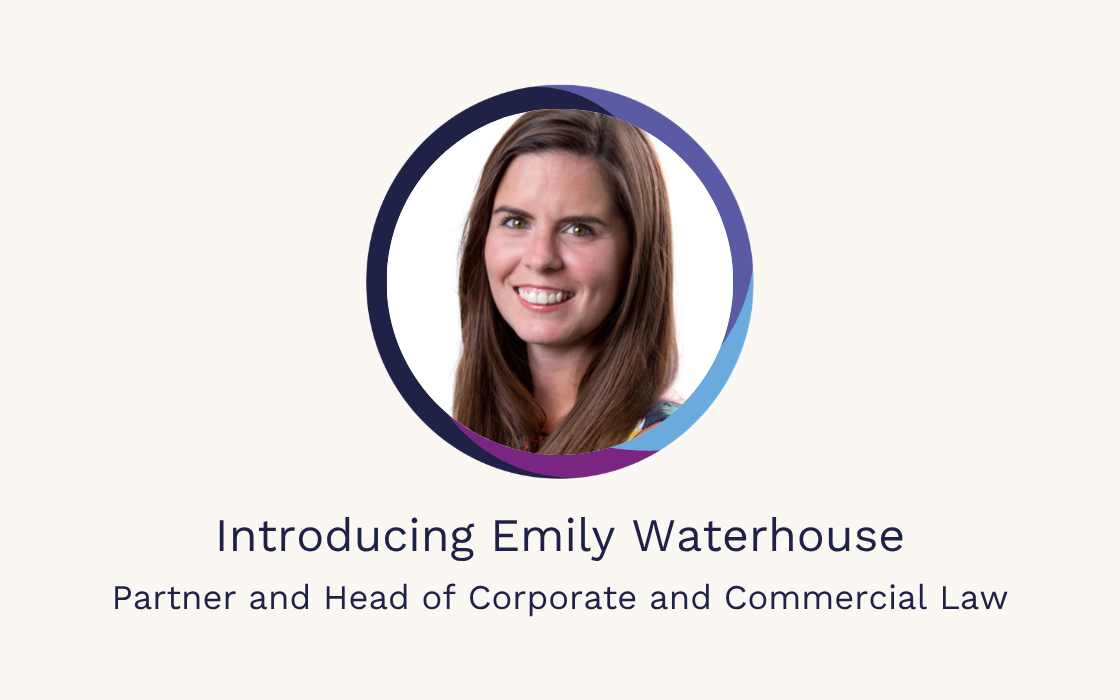
As Loch continues to grow its Corporate and Commercial Law offering, we spoke with Emily Waterhouse, Partner and Head of Corporate and Commercial Law, about what the right support for owner managers, shareholders and directors looks like during the most critical times for businesses, what are the most crucial clauses in contracts and how she ensures Loch’s focus is on practical, actionable advice.
With more than 15 years’ experience, Emily supports owner managed businesses at every stage, from growth to investment, through to restructuring and exit. She leads the team in advising on transactions, commercial arrangements and the legal foundations for growth.
Q: Why do you believe that Loch’s Corporate and Commercial Law department adds value for clients?
Many of the businesses we work with are evolving quickly, whether that’s scaling, restructuring, bringing in investment or preparing for a sale. Those moments bring complexity, and they need legal advice that is both strategic and practical and which helps them to make decisions with confidence.
At Loch, we’re focused on genuinely putting clients first, delivering advice that is commercially focused and helps move businesses forward. We’re not just outlining the risks then stepping back until a decision is reached.
Q: How do Corporate and Commercial legal services support business owners, directors and shareholders?
A lot of the most important legal protections sit in the foundations of a business. Things like shareholder agreements, commercial contracts and governance structures may not feel urgent when everything is going well, but they certainly become critical when something changes.
For owners and shareholders, those documents define rights, responsibilities and expectations so, done correctly, they prevent disputes, protect value and give clarity in situations where relationships or circumstances shift.
Commercial contracts are a good example. The clauses around liability, indemnities and payment terms can either limit risk or expose a business to it. If they are not understood or negotiated properly, that risk can quickly become real.
The key point is that good legal advice isn’t just about responding to problems, it’s also about preventing them.
Q: How does Loch’s team support businesses in practical terms?
We support clients with everything from company formation and governance, through to contracts, restructuring, acquisitions and exit planning.
But the real difference is in how we advise. Business leaders don’t need a long list of theoretical options, they want clear recommendations that align with their objectives. My approach is to understand what success looks like for the client and then help them achieve it with practical, commercially grounded advice.
Two clients might have the same legal issue but very different commercial priorities. The advice has to reflect that.
Q: You mentioned commercial contracts. Why are they such a focus area?
Because they underpin most business relationships. And are subsequently central in so many disagreements and disputes.
We support clients with a wide range of commercial agreements, such as terms and conditions, supplier contracts, consultancy agreements and, crucially, the detail within those contracts.
Unfortunately, the most important clauses are the ones people only scrutinise when something goes wrong. But those are exactly the clauses that can protect a business from unnecessary exposure.
Q: How does Loch’s wider, interconnected model benefit Corporate and Commercial clients?
A business might be dealing with a restructure, which has legal, employment and HR implications alongside tax considerations. By bringing those services together, we can provide much more joined up advice.
Another example is when disputes arise, whether they involve directors, shareholders, partners or commercial contracts. When that happens, we work closely with our Dispute Resolution team to support clients strategically and minimise disruption to the business.
Our approach saves our clients time and avoids duplication as well as surfacing risks or opportunities that might otherwise be missed. Rather than project managing multiple advisors, they get a coordinated approach where everything works towards the same outcome.
Q: How do you work alongside other professional advisors, such as accountants and tax specialists?
Collaboration is essential, especially on more complex matters like restructures, investments or sales, and we can take the lead when it is valuable to ensure that pace of progression is maintained
We work closely with accountants, tax advisors and corporate finance specialists to ensure that the legal implementation supports the broader strategy.
For example, a tax advisor might recommend a restructure for efficiency, but it’s the legal work that ensures that structure is properly documented and effective in practice.
Q: Finally, what is your approach to advising clients?
It always starts with listening.
Having worked in-house as well as within law firms, I know that you have to understand what the client wants to get out of a transaction or situation before you can advise them properly.
From there, it’s about weighing it up against their objectives and recommending a way forward that reflects their priorities.
Ultimately, good corporate and commercial advice should give business owners clarity and confidence, helping them move forward, not holding them back.
Need corporate and commercial advice?
Loch’s Corporate and Commercial team offers clear, pragmatic legal support for businesses at every stage. If you need guidance, the team offers a free initial consultation to understand your requirements and outline your options.
Learn more
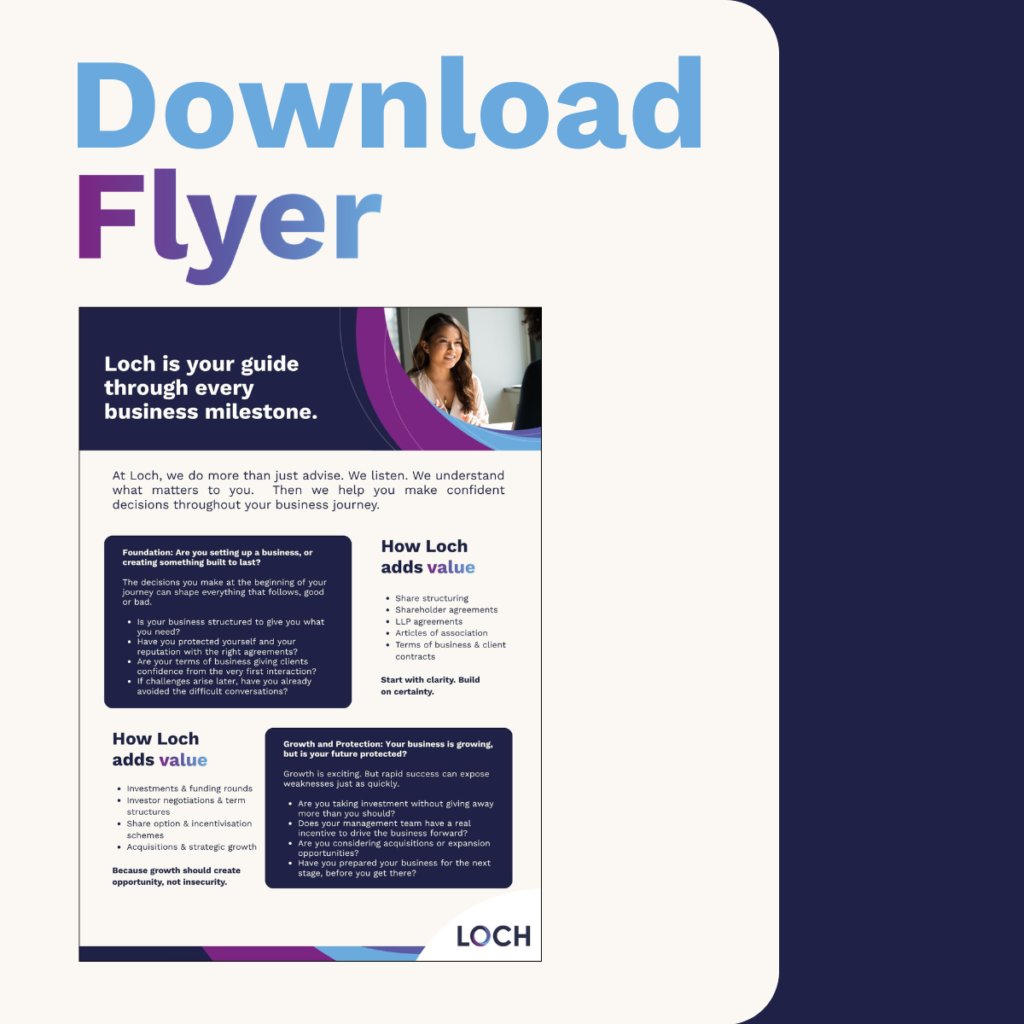
To find out more about our Corporate and Commercial Law services, download our flyer now.